

What is Agentic AI?
An AI Agent is an AI system built on large language models (LLMs). In this architecture, the LLM acts as the brain, responsible for language understanding and reasoning, while the agent functions as the body, executing tasks and interacting with tools and systems. Agentic AI extends this model into a fully autonomous digital agent. It can interpret goals, break them into structured steps, select appropriate tools, plan workflows, and execute tasks end-to-end with minimal human intervention.
Do I need a unified AI Agent management platform?
Enterprises often deploy multiple AI Agents across different functions. Without centralized governance, this can lead to operational inefficiencies, security risks, and compliance challenges. A unified Agent platform ensures AI operates in a controlled and transparent environment while delivering business value.
- Security & Governance Provides full lifecycle management for AI models and agents, consolidates shadow AI, and enforces identity and access controls to prevent unauthorized access and abnormal behavior.
- Data Interoperability Standardizes integration across systems to eliminate data silos and enable cross-team collaboration and efficient workflows.
- Cost Transparency Monitors token consumption in real time, sets usage limits, and dynamically allocates models and agents based on task complexity to optimize resource usage.
What is the difference between OrientAI and an API management platform?
OrientAI, as an AI Agent management platform (Agentic AI platform), is essentially a hub that integrates various AI APIs, allowing AI to access enterprise data and operate systems within a controllable range.
Will my data be used to train third-party models?
Your data remains yours and will not be used for any other purpose.
What are the common challenges when adopting AI Agents?
As Agentic AI becomes more widely adopted, increasing autonomy also introduces new governance complexity. Common challenges include:
- Fragmented workflows Lack of unified orchestration and monitoring across systems hinders coordination between agents.
- Security and compliance risks Insufficient access control and poor data governance increases the risk of data exposure.
- Increased costs Invisibility of token consumption makes costs unpredictable.
- Technical constraints Adoption stalls due to integration issues and misaligned business logics.
Enterprise Agentic AI Platform
Govern, Secure and Scale AI Agents in One Place Govern, Secure and Scale AI Agents in One Place
Govern, Secure and Scale
AI Agents in One Place Govern, Secure and Scale
AI Agents in One Place
OrientAI: Where AI Interacts, Works and Plays by Rules
OrientAI: Where AI Interacts, Works and Plays by Rules

Let Agents Coordinate
Build a team of AI agents that autonomously work for you

Centrally Manage Agents
Detect shadow AI to safeguard against AI-related risks with access control

Keep Tokens in Check
Track and limit token usage for optimized costs and transparency

De-risk AI
Monitor AI-generated response, task execution and anomalies

Scale AI at Speed
Connect real-world data and tools with MCP standard
Workflow Efficiency
40-60%

Operating Costs
20-30%

Governance Risk
90%
OrientAI: Unified AI Governance for
Compliance and Innovation
OrientAI: Unified AI Governance
for Compliance and Innovation
Start a Chat
Convert natural language into structured, executable tasks
AI takes on tasks and acts
- RAG-powered Q&A and document processing
- Cross-system AI agent automation
- Multi-LLM integration support
- Flexible cloud and on-prem deployment
Application
- Knowledge Management
- AI-enhanced Analysis
- Process automation
- AI-assisted Decision Making
- RAG-powered Q&A and document processing
- Cross-system AI agent automation
- Multi-LLM integration support
- Flexible cloud and on-prem deployment
Application
- Knowledge Management
- AI-enhanced Analysis
- Process automation
- AI-assisted Decision Making
Put AI Agents to Work
Break tasks into steps. Assign agents to interact and perform actions.
AI prioritizes rules and performs reliably
- Unified Agent control and standardized authorization
- Token usage monitoring and resource allocation optimization
- Eliminates shadow AI, prevents sensitive data leakage
- Unified cross-department permission management and data governance
Application
- Resource Optimization
- Cross-functional Collaboration
- Permission Review
- Informed Budgeting
- Unified Agent control and standardized authorization
- Token usage monitoring and resource allocation optimization
- Eliminates shadow AI, prevents sensitive data leakage
- Unified cross-department permission management and data governance
Application
- Resource Optimization
- Cross-functional Collaboration
- Permission Review
- Informed Budgeting
Govern and Secure
Centrally manage access control and token costs for reduced risks

OrientAI: Where AI Value is Measured and Realized
OrientAI: Where AI Value is Measured and Realized
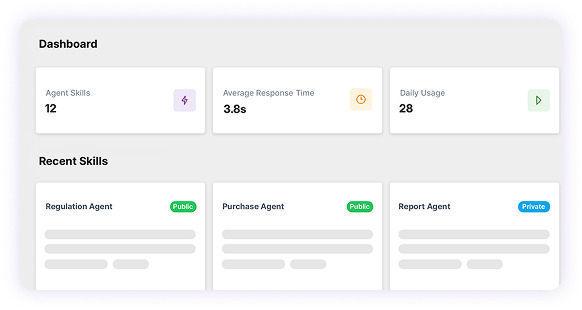
Agent Collaboration
- Integrate agents with existing systems and workflows
- Gain real-time visibility into agent status and behavior
- Auto-assign tasks to agents
- Prevent execution conflicts or unintended actions
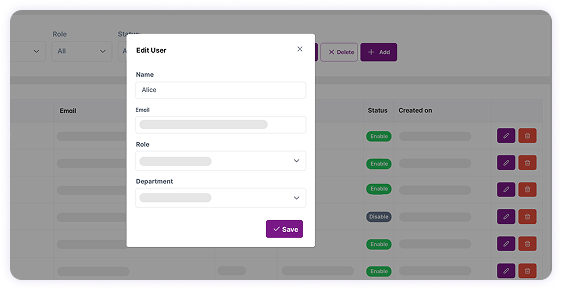
AI Governance
- Enforce security with role-based access control (RBAC)
- Track system logs for traceability and auditability
- Detect anomalies by identifying unusual behaviors
- Enable instant response and handling with real-time alerting
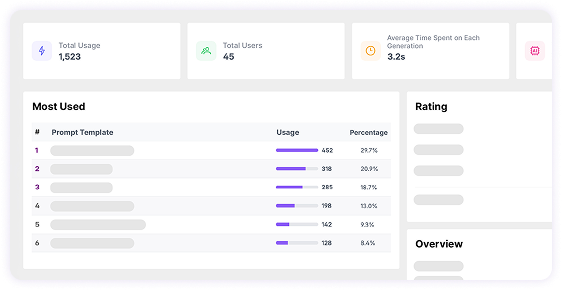
Maximized ROI
- Track token usage and set spend limits
- Enable switching between AI models
- Enhance visibility into token costs
OrientAI + AI Hardware
OrientAI + AI Hardware
Integrated solutions with aiDAPTIV for enhanced memory performance, reliability and inference at speed.
 Small Team (1-5 users)Lightweight Models
- AI PC
- Workstation
 Organization (More than 5 users)Large-scale Inference
- Workstation
- AI Server
Build Agentic Workflow with OrientAI
“ Manage AI Agents with Confidence and Drive Real Outcomes”
FAQs





Test